Do you want to sell solutions to problems, or design solutions to problems? Get the education and training to be the person who is asked to design solutions to problems, not the person who goes out and implements those solutions. Lots of people use tools, but only a few design them.
Category Archives: Ramblings
Talk about a Rock Star Economist!
My last post referred to my status as the “94-Rock Economist” and “Economist to the Stars” — titles given me by former KRZZ morning show host TJ Trout. The New York Magazine posted an article about Thomas Piketty, the French economist who has made a rather big splash on this side of the Atlantic with his book “Capital in the 21st Century” released in English by Harvard University Press last month. The article refers to Piketty as a “rock star economist,” which is a status I guess economists rarely achieve. I was the 94-Rock Economist for about 20 years, and may survive longer if Swami Rob wants me back on his show more regularly. Time will tell.
But in the meantime, Piketty is getting all the attention. And justly deserved. If you read the many reviews of his 700-page book (The Economist provides a nice review), I’m sure you’ll find his thesis compelling. While he says lots of things, one of the biggies is that the more egalitarian economic experience of the middle of the 20th century was an aberration, a deviation, from the more normal state of things before, and after. We are currently experiencing a period of extreme income inequality, and apparently that’s more the norm than most of us would like. For me, the lasting value of Piketty’s book will be how it brought income, and especially wealth, inequality, back into the center of the discussion. It’s important, and we should be talking about it. Maybe it’s even more important than most things economists talk about.
My alter-ego: the “94-Rock Economist”
Back in 1992 (anyone remember back that far?) I was asked by TJ Trout, the host of the morning show on KRZZ (94 Rock) to come on his show and talk about the economics of Ross Perot (anyone remember him??) It was election year and Perot was running on many planks, but one was a more business-based understanding of national economics. There was, in particular, real concern about the national debt (boy, if only they’d have known how big it would get 20 years later!) Anyway, I went on the show, and that — as they say — launched my career in radio.
I “appeared” on the radio occasionally with TJ for many years until he retired a couple of years ago (maybe 2012.) During that time I was dubbed “the 94 Rock Economist” and “the Economist to the Stars.” The morning show continued just fine without me, but the guy who hosts it nowdays, Swami Rob, called me up and asked me to come back in to talk about savings and retirement. It was fun, and here’s an audio podcast if your interested.
http://www.spreaker.com/user/kzrr/phil-ganderton-401k-info-4-8?utm_source=widget&utm_medium=widget
Worried, or Concerned?
The internet is full of pages and posts nuancing the difference between worry and concern. Worry is heart-felt, concern is cold; worry is a problem, concern is a solution; worry is a subset of concern. Some people think they are perfect synonyms.
My father used to say that he had few worries, but many concerns. He told me that to worry was unproductive, but to be concerned was healthy. I think he would have agreed with the idea that to worry is to focus on the problem, to be concerned is to focus on the solution.
Concern seems like a very human feeling, showing empathy or sympathy (another topic for a blog entry in the future.) It also seems to be reflective, suggesting a thoughtful process. Worry just appears to be easier, and less meaningful. Nobody wants to be labeled a worrywart!
So don’t worry, be concerned.
Photographing cars
There are lots of opportunities to photograph cars, and there are so many cars in so many situations. You’d think it would be easy…
Lately I’ve been trying my hand at making photographs at Porsche Club autocross events. Good looking cars in a small space, going fast. I have been using my longest lens, my 70-300mm L zoom (big white Canon lens.) My goal has been to capture the driver in the car–to not just photograph the car, but to capture the idea of driving the car in one of these events. For example:

Click on the image to see it much larger. That the weather was overcast, that the driver is wearing a helmet present some difficulties, but over-all the idea is to make a nice photo of the car and driver.
You can see more photos in my Porsche club galleries.
Super Bowl marketing
At $4million for a 30sec advertisement the Super Bowl is obviously a very special marketing opportunity. Millions of viewers, everyone sitting at home eating wings and wanting to buy shit. Well, once the Denver Broncos fall 35 points behind (even earlier?) what’s a 30second advert worth? I’d guess…a lot less!
UNM’s wolf pack
A pack of six grey wolves has taken up residence in the grounds of UNM as of late 2013. Spreading themselves around the campus, rather than instill fear into the faculty, staff and students, they infuse the campus with the spirit of the Lobo. These new lobos join the original three found on the southern edge of the main campus. Here’s a photo of the wolf outside the southeast door of Scholes Hall.
 Here’s a map of the locations of all nine wolf statues on main campus (click to enlarge). Red dots show new wolves, purple dots the earlier statues.

2013 in review
The WordPress.com stats helper monkeys prepared a 2013 annual report for this blog.

Southwest New Mexico
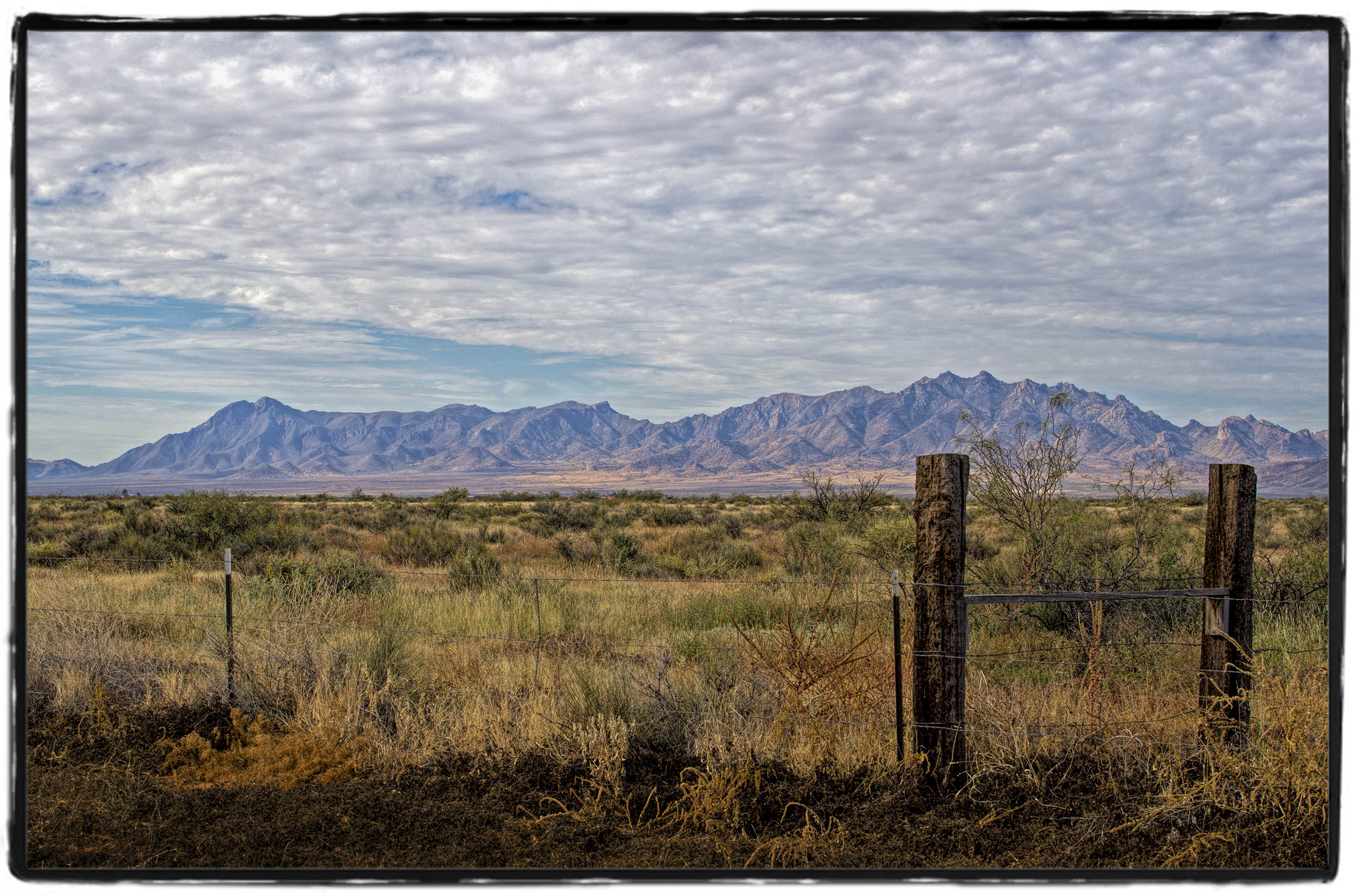
Looking southwest just east of Deming, New Mexico at the Florida Mountains.
The All-seeing Eye
This week’s The Economist leader is about Google Glass and the ubiquitous camera. (Link)
A fascinating read, and a challenging topic. With billions (!) of cameras in cell phones, video cameras on motorcycle helmets, surveillance cameras in stores and street corners, cameras on the dashes of police cars and the lapels of policemen, it’s probably hard to go a day without having your photo taken, openly or surreptitiously. The article talks about wearable imaging technology, but the deeper issues center on privacy and security. I can protect myself by photographing the damage to my car, or videoing an altercation at the football match, but would I want to be photographed or videotaped without my consent? And what am I consenting to? What if the video ends up on YouTube? That I might post a dumb photo of myself on Instagram (and maybe sen images through Snapchat that are not so ephemeral afterall,) is one thing, but what about images containing me that others post, and share? Remember the Slate writer’s (in)famous claim that there were no photos of her daughter on the Internet, only to be proven wrong by those with nothing better to do?
The world is a scary place, and we have to be careful, vigilant even. How we manage our own images is a challenge, only to know that these days those are probably outnumbered by the images that we appear in without our knowing, or consenting.
Back to the old rule: if you wouldn’t want it to appear on the front page of the newspaper, then don’t say it, or do it!
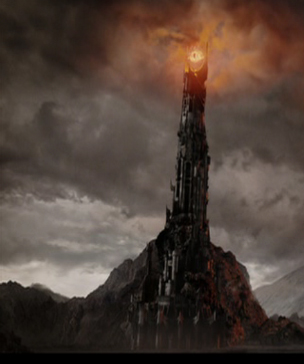
Image of Barad Dur from Wikipedia entry, LOR films.
 Philip Ganderton