I posted about baggage fees some time ago, and this October 2013 Economist article talks about one airline that charges more for carry-ons than for checked luggage. What interested me most is that one of the many “new” fees – albeit optional – is one to jump the queue and board earlier than other passengers, presumably to have a better chance of finding an overhead bin to stuff your refrigerator sized luggage in. So, indirectly, airlines are charging for carry-ons. Unfortunately it still leaves many elephants determined to stuff their trunks into the full overhead bins, and then delaying departure because they end up checking the bag anyway.
Category Archives: Ramblings
Flying boats
The 34th America’s Cup is over, and after a miracle occurred, Oracle Team USA won!

I give it to the Oracle team, they recovered from the shock of Team New Zealand’s (TNZ) initial skill and speed, and climbed the steep learning curve like a monkey! They were clearly the faster boat by the last week of the competition. It was TNZ’s to lose, and Oracle’s to win, and they did it.
(Here’s a great WSJ article about the series with lots of tech. From late Feb. 2014)
While I was watching the event, I got quite interested in how the boats sail so fast, especially how they “foil” (short for hydrofoil.) But before I learned about that, I had to figure out how boats sail against the wind, and faster than the wind.
How do boats (any and all) sail upwind? I saw a video during the AC34 races where a guy explained it like pinching a wedge shaped object between your fingers. The sail/wing produces a force trying to push the boat over (sort of sideways) but the keel (and did you see how small the keels (rudders and daggerboards on the cats) were) which is slicing through the water having a substantially greater coefficient of friction than air, is exerting an equal force on the boat to make it stand upright. Two squeezing forces. Put a marble between your finger and thumb and squeeze together–the marble launches away. So does the hull of the boat. It accelerates forward. Consider now the forces that must be exerted on the boat to be able to make it move forward at 50mph!
As for foiling, the dagger board is J shaped and so there’s a horizontal surface under the water that produces lift as the boat moves forward. The crew can control the angle of the board to lift the boat (going straight the force is about 7 tons on a piece of carbon fiber the size of a surfboard) out of the water. Less drag from the hull…go faster, produce more lift…oops but not too much! Spithill, Barker and the crews made it look easy, but they must be on the edge every second.
Carhenge
For those of you who never believed I had been to Carhenge, here’s an article about the gifting of the unique landmark to the city of Alliance, Nebraska. I was there many years ago, and I don’t remember the cars being painted all one color (grey) but it was a somewhat mystical place…(like Stonehenge.)
http://www.autoblog.com/2013/09/03/carhenge-monument-becomes-property-alliance-ne-video/
Texting the write way
Check out this very informative flyer from Maria Granone (Executive Director of the New Mexico chapter of the National Electrical Contractors Association, NECA — and my dear wife!) reflecting on the proper, and improper, use of texting in work and business environments. I hope you find it as helpful as I did!
It can wait. Really it can…
 I have strong feelings about distracted driving. I hate it. Every time I drive my car to and from work, I think about the distracted driver next to me, or behind me, or in front of me, about to do something really bad because they are not paying attention–100% attention–to driving. Driving near me.
Research findings indicate that driving while on a cell phone, or worse, while texting, is equivalent in outcome to driving drunk. Distracted driving might be worse, because many people think that having a cell phone conversation while driving is no different than talking to a passenger while driving, so they do it, all the time. Drunk drivers are vastly outnumbered by distracted drivers. But both are arrogant and selfish.
Famous film maker Werner Herzog was asked by ATT to make a short film about texting while driving. It’s compelling by any measure. Watch it. Please.
Don’t just stand there
Aside
…walk around a little. According to research reported in a recent Economist blog entry, walking around for two minutes every 20 makes a big difference in a person’t general health. Especially if you’re inclined to sit all day at work, in front of a computer, like me…
The perfect walk-around lens?
Image

The Canon 40mm f2.8 pancake lens. Even with a lens hood, it’s small, reasonably fast (f2.8), quiet and incredibly sharp. It’s dwarfed by the 1D-X, but I love carrying it around as it doesn’t protrude like most other “pro” lenses. Image quality is very impressive indeed. And the 40mm focal length is just great on a full frame body.
Video: Panizzi does 360 at Rally Catalunya, 2002
Video
This is great, especially the in-car video where he waves to the crowd…
Audio – the halcyon days
I was once a pretty serious audiophile. Really serious actually. I built a dedicated listening room, to “recording studio” standards, employing structural elements (reinforced walls for example) and acoustic elements such as diffusers and absorbers. It certainly created a wonderful environment that added to the enjoyment of music playback!
Inside this space I put, as the final specification of a system that went through many configurations, the following gear:
Krell KPS-28c CD player
Krell KRC-HR preamplifier
Krell FPB-600 stereo amplifier

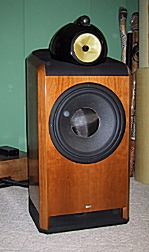
B&W Nautilus 801 speakers, with custom crossovers
Purist power cables
Purist XLR interconnects
custom speaker cables (silver wire)
custom stands and acoustic suspension supports for components
While the electronics were all Krell, the speakers were really something special. I bought the Nautilus 801s and gutted them (!) removing the stock crossovers and wiring. I replaced the wires with pure silver and built entirely new and separate crossovers. Using Northcreek components, each crossover was 20″x16″x6″ and weighed 200lbs!
The entire system was valued at around $50,000 and the sound was truly amazing. Spacious, detailed, with strength, delicacy, nuance and pace. I don’t miss it so much as remember it fondly. Some things are just in your life for a time, and then they go and you move on.
Nowdays I listen to an old but well-cared-for B&W 802 IIs driven my a tiny (6W) single ended triode Minuet amplifier. The source? Pandora on my iPhone…
Making Photographs
Quote
“As with all creative work, the craft must be adequate for the demands of expression. I am disturbed when I find craft relegated to inferior consideration: I believe that euphoric involvement with subject or self is not sufficient to justify the making and display of photographic images.”
Ansel Adams Examples: The Making of 40 Photographs 4th edition, Little Brown and Company
 Philip Ganderton