Welcome 2013!

Another year… My 56th, so it should be a good one!

Last years wasn’t so bad at all. Thankful for the health of my family. Kirsten started her senior year at high school, Emily started middle school, and Maria successfully negotiated a difficult, but critical, contract with Local 611. I joined the Porsche Club of America, and ended the year elected to the club’s board–who would have guessed, eh?

I begin the new year with a renewed interest in making photographs, with a goal of publishing an academic paper this year after a pretty long dry spell, and a commitment to posting more to this website. Let’s see how that goes…

the Next Porsche Cayman

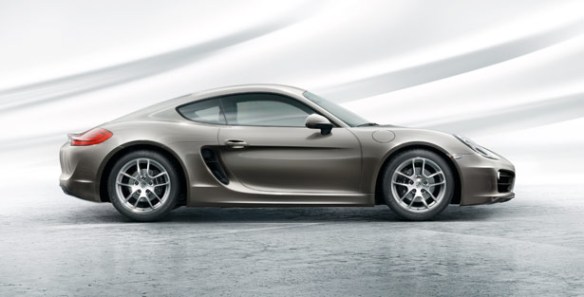
Porsche announced the next Cayman (the 981) at the LA Auto Show, available in spring of 2013. This is what it looks like:


“Lighter, bigger, more powerful, faster” That’s what Porsche says, and I have no reason to argue–it looks different, but familiar enough to be the next generation Cayman. And I’m sure it’s got all the latest wizbang gizmos to back up the 4.4 seconds to 60mph spring time.  Woohoo.

Just for a lark, I grafted the rear quarter panel of the new 991 (“911” Carrera) on to the photo above to see how it looks compared to the traditional and iconic Porsche.

Weird, eh?


Tasting wines

On Sunday, chef and co-owner of Terra American Bistro, Peter Lukes provided wonderful food to complement the baker’s dozen of wines offered by oenophile Jack Vesey, who comes down from Colorado monthly to share his experience and his wine collection with those of us privileged to receive a regular invitation. This last tasting was of French Burgundy wines, 2002 vintage, from the Corton appelation. Some very nice Pinots, that Miles would have enjoyed, I’m sure.
I’m no wine expert, but I sure enjoy drinking the stuff. Which is probably why I joined the American Association of Wine Economists. (That’s about as dull a website as you’ll find, by the way.) They have some interesting articles in their journal, including a survey of the hot topics in wine economics: wine as an investment, wine and climate change, and expert opinion regarding wine. Research on the first topic suggests that wine is not a great investment unless you choose regions, winemakers and vintages very carefully. Generally wine is a better investment in your enjoyment of life. Statistical models developed in the second topic show that climate is about the best predictor of wine prices. So global climate change should have an impact on what we will pay for wine in the future. The last topic is particularly interesting, because the analytical results show that expert opinion is insignificant in explaining wine prices after controlling for climate.
Another interesting article published by the AAWE is a funny take on all the fluff that surrounds wine by a Princeton economist, Richard Quandt. It’s called “On wine bullshit: some new software?

Are you in the 47% or the 53%?

I was reading about the 47% this morning. This is the proportion of Americans (individuals, families, taxpayers, earners?–they never tell us what the base for the statistic is, but if you read my post about the 1%ers, you’ll see that it makes a difference) that don’t pay federal income taxes. (Of course, they probably don’t then pay state income taxes either, but they pay sales taxes, excise taxes, maybe property taxes and other government fees.) Presidential hopeful Mitt Romney linked those who don’t pay taxes to those who are dependent on government welfare and support. (They are irresponsible and careless, too.)  They are the “takers” as opposed to the 53% who are “makers.” The solution? Cut government expenditure programs to encourage them to join the ranks of the makers, and start paying federal income taxes.

But who is earning so little that they don’t pay federal income taxes, and qualify for food stamps, out of choice? There’s the–not so hidden–charge that people are choosing to be unemployed, or take on menial low-wage jobs because it’s better than the alternatives. When the unemployment rate is over 8%, there really aren’t too many better options for the 43%ers. (Don’t mind the logical problem caused by the fact the majority of Americans who receive support from the government are retired, disabled, or going to college, and aren’t really looking for full time, tax-paying work.)

Those 43%ers who are unemployed, or earning such low wages that they don’t pay federal income taxes at the end of the year, are victims (or at least have a victim mentality.) But who or what are they victims of? How about “makers” who are forced to cut costs to remain competitive, who cut salaries or lay workers off to maintain profits, or cut losses in a depressed economy? And these aren’t the 1%ers, like Romney. These are middle class business owners, many of them employing less than 50 people, even less than 10 people, who are paying taxes (to the federal, state and local governments) and scraping by month to month. They have family members, and former employees who are now part of the 43%.

Romney may not be able to convince 47% of the voters to support him in November, but his bigger problem is convincing enough of the other 53% to find his brand of Darwinian individualism palatable. We’ll see…
Sound smart while drinking

As an eWinexpert witness, I know what it’s like to sound smart, even if sometimes you’re holding on to the rail… But one of the areas in which I certainly don’t sound smart is when describing how wine tastes. I have practiced a lot, and I’m willing to do more, but you’d think after all these years I’d be able to describe a tannin, or differentiate a cherry from a blackcurrant. I don’t know if I’ll ever taste “horse leather” or some of those other crazy, pretentious descriptors people use, but the simple ones seem doable.

I recently found a great article on the Business Insider website. It makes sense and might help you, like it did for me, to better understand what we’re drinking–and then talk about it.

Seeing the unseen

If you haven’t found “Wind Map” yet, then read this nice article from the Economist about the visualization of wind speed and direction across the United States, updated hourly and animated. You can zoom in and see what the wind is like where you are. I found this a few months ago, and have repeatedly returned to the website, either to see how tough my bike ride is going to be, or simply to watch the beautiful patterns of an otherwise invisible force.

Till death do us part

While presenting a lecture on the Life-cycle model of personal finance (my term) I talked about the end-point of the model: death. I made the point that in a world that is essentially uncertain (especially as we experience it sequentially,) there is only one thing that is truly certain—the death of an individual human. How ironic that true certainty is reserved for the one thing that the vast majority of people find difficult to consider and discuss. Everything else is uncertain, admittedly to vary degrees (between 0 and 1, in fact.) Death is also the only thing in life that is common to everyone. Not everyone gets to ride a horse, or go to school, but everyone dies.

Of course, if you’ve read this far, you’ve probably said to yourself, I know why people don’t talk about death: it’s so morbid! And who wants to hang out with someone who keeps talking about dying? But I’d like to argue that because death is so certain, it’s actually not very interesting. What’s actually interesting are the related questions of how and when? Thinking about how just satisfies our curiosity hoping we don’t die a horrible, or painful, death. Thinking about when has real implications for what we do now, and tomorrow in all the personal, social, and economic dimensions of our lives. I spend quite a lot of time thinking about these aspects of death. For good reason.

Risky business

While researching for a paper I am writing about socioeconomic resilience (yes, it is a buzzword) I spotted an interesting article in Slate online magazine (there are many.) The author states that uncertainty is the biggest security challenge facing the US since (or because of) the 9/11 attacks. Which got me to thinking—has randomness, the phenomenon underlying uncertainty, increased recently? I’m pretty certain (!) the answer is no, so in what sense has uncertainty increased? (By the way, for me, semantically, risk is simply the downside of uncertainty: all those bad things that happen, rather than the good things, when we think about what could happen.) Uncertainty could have increased due to an increase in the number of people, and events, happening in the world, or the complexity of the interactions between those people and events. We did just recently break the 7 billion people barrier (see blog entry below,) so that’s a lot of people, and events! And increased complexity means that we know less about more things, or a lot about fewer things, so more things fall into the category of “I don’t know about that,” or “there’s not enough information about that for me to decide.” So I’ll concede that uncertainty may have increased without any change in the underlying randomness of events, which makes me feel somewhat better. Because unlike randomness, which is surely beyond the influence of humans, greater uncertainty can be reduced by more information, more thought, and more understanding.


The 1%ers

A Google search will reveal a lot about WHO the 1%ers are, but it requires a little math to answer the simpler (in my opinion) question: how many 1%ers are there? I am also interested in a related, yet personal, question: how much more do I have to earn to be part of that much-maligned group?

This Washington Post article from 2011 claims that the top 1% of households earn more than $516,000 (in 2010.) To put that in perspective, earning less than $59,154 that same year puts you in the company of 60% of US households.  The Census Bureau estimates there were 118.6million households in the US in 2011, with an average of 2.6 people per household, so there were about 3.1 million people in the top 1% last year. Note that the official population of the US in 2011 was 311million, which means these back of the envelope calculations are reasonable.

What’s the threshold to be in the 1%? The Washington Post article says $516,000. Occupy Wall Street defines the top 1% as those taxpayers (individuals or households depending on filing status) earning more than $400,000 annually. They alternately define the 1% as having net wealth of more than $1.5million.

According to another website, in 2009 the top 1% of taxpayers earned more than $344,000.

And just how wealthy are the 1%ers? From the Washington Post article, the average income of the top 1% of households was $1.5m in 2011 and they had an average wealth of $14m (in 2009.)

Thankfully, money doesn’t buy happiness*…

*btw, this is true the world over.