…walk around a little. According to research reported in a recent Economist blog entry, walking around for two minutes every 20 makes a big difference in a person’t general health. Especially if you’re inclined to sit all day at work, in front of a computer, like me…
The perfect walk-around lens?
Image

The Canon 40mm f2.8 pancake lens. Even with a lens hood, it’s small, reasonably fast (f2.8), quiet and incredibly sharp. It’s dwarfed by the 1D-X, but I love carrying it around as it doesn’t protrude like most other “pro” lenses. Image quality is very impressive indeed. And the 40mm focal length is just great on a full frame body.
Video: Panizzi does 360 at Rally Catalunya, 2002
Video
This is great, especially the in-car video where he waves to the crowd…
Audio – the halcyon days
I was once a pretty serious audiophile. Really serious actually. I built a dedicated listening room, to “recording studio” standards, employing structural elements (reinforced walls for example) and acoustic elements such as diffusers and absorbers. It certainly created a wonderful environment that added to the enjoyment of music playback!
Inside this space I put, as the final specification of a system that went through many configurations, the following gear:
Krell KPS-28c CD player
Krell KRC-HR preamplifier
Krell FPB-600 stereo amplifier

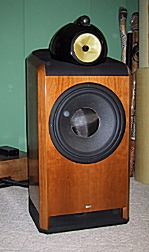
B&W Nautilus 801 speakers, with custom crossovers
Purist power cables
Purist XLR interconnects
custom speaker cables (silver wire)
custom stands and acoustic suspension supports for components
While the electronics were all Krell, the speakers were really something special. I bought the Nautilus 801s and gutted them (!) removing the stock crossovers and wiring. I replaced the wires with pure silver and built entirely new and separate crossovers. Using Northcreek components, each crossover was 20″x16″x6″ and weighed 200lbs!
The entire system was valued at around $50,000 and the sound was truly amazing. Spacious, detailed, with strength, delicacy, nuance and pace. I don’t miss it so much as remember it fondly. Some things are just in your life for a time, and then they go and you move on.
Nowdays I listen to an old but well-cared-for B&W 802 IIs driven my a tiny (6W) single ended triode Minuet amplifier. The source? Pandora on my iPhone…
Making Photographs
Quote
“As with all creative work, the craft must be adequate for the demands of expression. I am disturbed when I find craft relegated to inferior consideration: I believe that euphoric involvement with subject or self is not sufficient to justify the making and display of photographic images.”
Ansel Adams Examples: The Making of 40 Photographs 4th edition, Little Brown and Company
An Essay on Photography
I wrote the short essay on photography in 2001. I reprint it here in original form.
The vast majority of photographs made (including family snapshots languishing in long unopened albums) are documents, or records, of people, places, things and events. In fact, including all photographic negatives, prints and now digital files ever created, the number of “art (be it low- or high-)” photographs made is absolutely miniscule. So, trivially, photography is predominantly a documentary medium. But there is a healthy population of people who seek something else from photography, either as photographers themselves, or as admirers or owners of photography as a visual art.
Photography is art, or at the very least, craft. My father used to paraphrase the following statement, attributed to St. Francis of Assisi:
He who works with his hands is a laborer.
He who works with his hands and his head is a craftsman.
He who works with his hands, his head, and his heart is an artist.
By this definition nearly everyone who has made a print in a darkroom, or framed a photograph from last summer’s vacation, or thought about an alternative exposure setting, is a photographic artist. And I can live with that. So the product of such an artist is art, by definition. But to this supply-side interpretation of art add the demand side: art is in the eye of the beholder, and the viewer defines art. If people look at certain photographs and see art, then it is art. And I can live with that, too.
While initially deemed a mere pretender, photography begun to be recognized as art about a century ago, thanks to people like Alfred Stieglitz, who in 1902 formed the Photo-Secession group, photographers committed to establishing the artistic merits of the medium. Presently there is no doubt that photography is a legitimate artistic endeavor, and people earn their livelihood from making art photographs, even though many rely upon the documentary aspects of the medium—portraiture, weddings and annual reports—to pay the rent. The sale of Ansel Adams original prints (and who hasn’t ever owned one of those huge 2×3 foot Yosemite posters?), for large sums has helped establish photography as high, expensive, art.
Having seen many exhibits of photographs during my life, most by famous photographers, many photographs owned and exhibited by museums and galleries offer much documentary, and historical, value. Early daguerreotypes, for example, are valued more these days, perhaps, for their historical content than pure compositional or aesthetic aspects. But museums and galleries also display the best photographic art, by those recognized as the Masters. Life magazine used to, and the National Geographic journal continues to, present photographs monthly, albeit on pretty standard paper, that while primarily documentary and photojournalistic in intent and nature, are often magnificent art. While many major photographers established their careers with Life magazine, the photographers of the National Geographic maintain and promote the highest standards of the craft.
Even in its most primitive state as document of record, a photograph is an abstraction. More than painting, photography maps a 3-dimensional and ever changing world into a 2-dimensional, static image, stored on some appropriate medium. The classical black and white image takes the abstraction one step further by removing all color from a colorful reality. Shunned by purists, color photography compared to black and white is more realistic, more mundane, less abstract, less artistic. Manipulation of the black and white image in the darkroom allows the photographer to create an even greater abstraction, dodging shadow detail and burning in highlights, increasing contrast or toning the print. But all this abstraction and manipulation has as its motivation an artistic expression. Ansel Adams is on record admitting to severe manipulation of Moonrise over Hernandez, and a comparison of the original negative and most prints reveals the extent of his efforts to create a mood and feeling in the viewer that could only ever have been pre-visualized in the minutes it took to make the exposure on the roof of his car off the road outside Espanola, New Mexico.
While the abstract nature of photographs surely helps when claiming photographs as art, the intent of the photographer is, I believe, the defining element. Returning to the quote from St. Francis, an artist uses hands, head and heart to create art. Use of hands and head is essential to craft, and photography beyond snap-shooting is undeniably a craft. While nearly all modern cameras that use roll film, and digital cameras, provide the photographer with a plethora of automated functions, they also provide considerable control over exposure, focal length and focus, giving the user more creative options than ever before. Mastering the camera as a tool requires time and a concerted effort, and is rewarded when the photographer is able to capture the moment, or determine the exposure quickly and efficiently. But why this photograph? Why that composition? The photographer’s heart can be found in the eye. If the photographer views the image as documentary, then it will likely turn out to be such, with little regard to art. That is, if the primary intention is creating a record of a person, or event, then art and emotion, even composition, become secondary. Alternately, producing artistic images very often involves subjects as they are found in their natural state and position, and framing, angle, and scope are defining choices for the photographer. Subjects are chosen and framed to accentuate lines, shapes, textures, colors, and—with people—feeling and emotion.
Since photography nearly always uses found objects as subjects, other than in studio photography and still life, the choice of framing the image in viewfinder is pivotal. And it is here, as well as in other technical aspects of exposure, that the photographer’s “vision” is manifest.
D is for Dynamic Range
Dynamic Range is a measure of how much “light” is captured by the digital sensor and resulting image. It’s the range from the darkest black to the lightest white, or relative to an 8-bit scale, 0 is darkest and 256 is brightest. If the actual scene has a greater range of light intensity, then some parts of the image will be “blocked” at either black (0), or white (256) or both. Enough of the techno-babble, even though there’s a whole lot of interesting techno stuff related to this, often mixed into the discussion of high dynamic range (HDR) processing.
The sensor’s dynamic range is a physical limitation. Each part of the sensor can only “hold” so much light (or photons) before it becomes full, so you can “expose for the shadows” and risk blocking the highlights, or expose for the highlights and lose detail in the shadows. (More on this at E is for Exposure.) The luminance range of the scene can be measured in units called eV (exposure values) where each eV is double the amount of light of the lesser value. It’s believed the human eye has about a 10 to 14 eV range, whereas many camera sensors have a 8 to 10 eV range. The newest Sony sensors in Nikon and Sony cameras might have a 14eV range, and seem to show a much greater dynamic range than any Canon sensor. (Check out this Sony AR7 review with many comparisons of shadow detail between Sony and Canon.) Whether this is essential, or critical, or even important, is another matter, and the subject of much debate, especially considering most amateur photography is expressive rather than documentary.
Recently interest in high dynamic range (HDR) processing has increased, and some cameras even come with HDR built in. Essentially it’s a simple process of making multiple images at various exposures, some under-exposed and some over-exposed (relative to what the camera might determine is normal exposure.) These images are merged using software to capture the wider range of luminance in one image. I like to think this is similar to the process Ansel Adams describes in chapter four of his book “The Negative.” He called it the Zone System and it relates subject luminance range to the scale of grays (white to black) on the final print. For Adams the method by which the visualization of the final print came from the exposed negative was both a technical and creative/artistic process. Although Adams worked with film and paper and chemicals, the idea that the scene has some dynamic range, and one of the photographer’s choices is how to represent that dynamic range in the final image, still remains relevant today.
If the camera sensor has a greater capacity to record detail in shadows and detail in highlights, then that’s a boon! But even without having that super sensor, there are many ways to achieve a particular artistic outcome, including deciding to give up the shadow detail for more highlight detail, to make multiple exposures and process using HDR software, or to use other software manipulations (Photoshop has a “shadow and highlight” tool that can expand or compress these areas of the image after the fact, even though it sometimes makes the image look flat. A photographer can learn how the camera sensor “reads” light, and experiment to develop processes to achieve the desired image.
Don’t believe your temp gauge
Probably not the most important issue in life, but something that really ticks me off. Cars come with gauges to indicate speed, distance traveled, fuel level, and engine coolant temperature. I have installed a ScanGaugeII in my car that reads many of these things directly from the car’s computer. The photo below shows the SGII below the instrument cluster. Notice that the car’s temperature gauge indicates the coolant temperature as 175F, which is “normal.” The SGII shows the coolant temperature is actually 216F, which is still within the normal range, but is 41F higher than what I would think it was without the SGII. That’s quite some “measurement error!”

Tools or Talent?
 One of the oldest questions in photography is what counts the most: tools or talent? Most people want the answer to be “talent is more important than gear” because they believe or hope they have the talent. And, for sure, there are some people making wonderful images with cell phones due to their talent. But they also have a great understanding of the picture-making tool they are using. Knowledge of the tool is a critical element in making great photographs. Of course, this has always been true–for woodworkers, musicians, even golfers! Great skill with the tools of one’s trade frees you to be creative, to achieve the expression of your vision both efficiently and effectively.
In photography, the camera is the tool. Ansel Adam’s 8×10 view camera, Cartier-Bresson’s Leica and Weegee’s Speed Graphic were all “difficult” cameras to use and master. Any modern DSLR is far easier to use. It’s easier to take control of a modern camera, thereby releasing the photographer to concentrate on expressing their vision and developing that talent. That’s the irony – the tools have gotten more user friendly, which has created a complacency and laziness in the vast majority of photographers so they don’t work so hard to develop their talent. They expect better results, great photos, without trying hard to achieve those results.
Like most people, my limiting factor is not the gear, but the time and effort required to make satisfying images. I like the image above, made in June on Ocean Drive, the hub of Miami’s South Beach district.
C is for Camera
It used to be a basic rule of photography: you cannot make a photograph without a camera. So bring your camera along, get used to having your camera with you, overcome any shyness you have about having a camera on you.
These days more photos are taken with cell phone cameras than with traditional cameras, I’m sure. So having a large DSLR around your neck seems to make you stand out in the crowd–for good or bad. And while cell phone photographs are essentially opportunistic, and despite some luck and/or great skill, tend toward the crappy photo end of the image spectrum, they don’t seem to fit with a more serious attitude to making photographs.
But back to the rule. IF you are serious about photographic quality as well as expression, and you prefer to use the big tools (DSLR and interchangeable lenses) then developing a habit of taking your camera with you will increase your awareness and help you see more photographs. I try to take my camera with me to work every day. Just the body and one lens. Even if I don’t use it, I walk about looking at my surroundings more “photographically.”
As for what type of camera you need, the answer is always whatever you want and can afford. Many wonderful images have been made with cell phone cameras, pin hole cameras, film cameras, compact cameras, and professional grade DSLRs. It IS all about the vision and skill of the photographer and NOT the equipment, but most people serious about photography end up wanting a DSLR with interchangeable lenses because they offer greater creative control over the final image. Short of being a professional photographer, most people have more than enough equipment of a very high quality, and could do just as well with less equipment. I certainly have way too much equipment. Given that few people see any of my photographs, and I print very few of them, I don’t need a Canon 1D X. But it’s certainly cool to have one! The advice I give most people is to let the use of the resulting images determine what camera to buy. You may find yourself wanting more, and better, but if you print 5x7s and show them once to friends before putting them in the shoe box for eternity, or if you post photos to your Facebook account every now and then, having a DSLR is probably overkill. If you want to print high quality 16x20s and sell them, you need a more expensive DSLR with good lenses. Again, most photographs are made with cell phones, and for good reason–they are available, easy to use, quick to use, and the resulting image looks OK on a 3″ diagonal screen…
 Philip Ganderton